Jul 17, 2026Materials & Processes
Silicone vs PVC for IP Merchandise: Which Material Fits Your Product?
Silicone or PVC? It's not about cost — it's about touch, safety, and where your product will be sold. Compare both across feel, finish, certification, mold cost, and durability for IP merchandise.
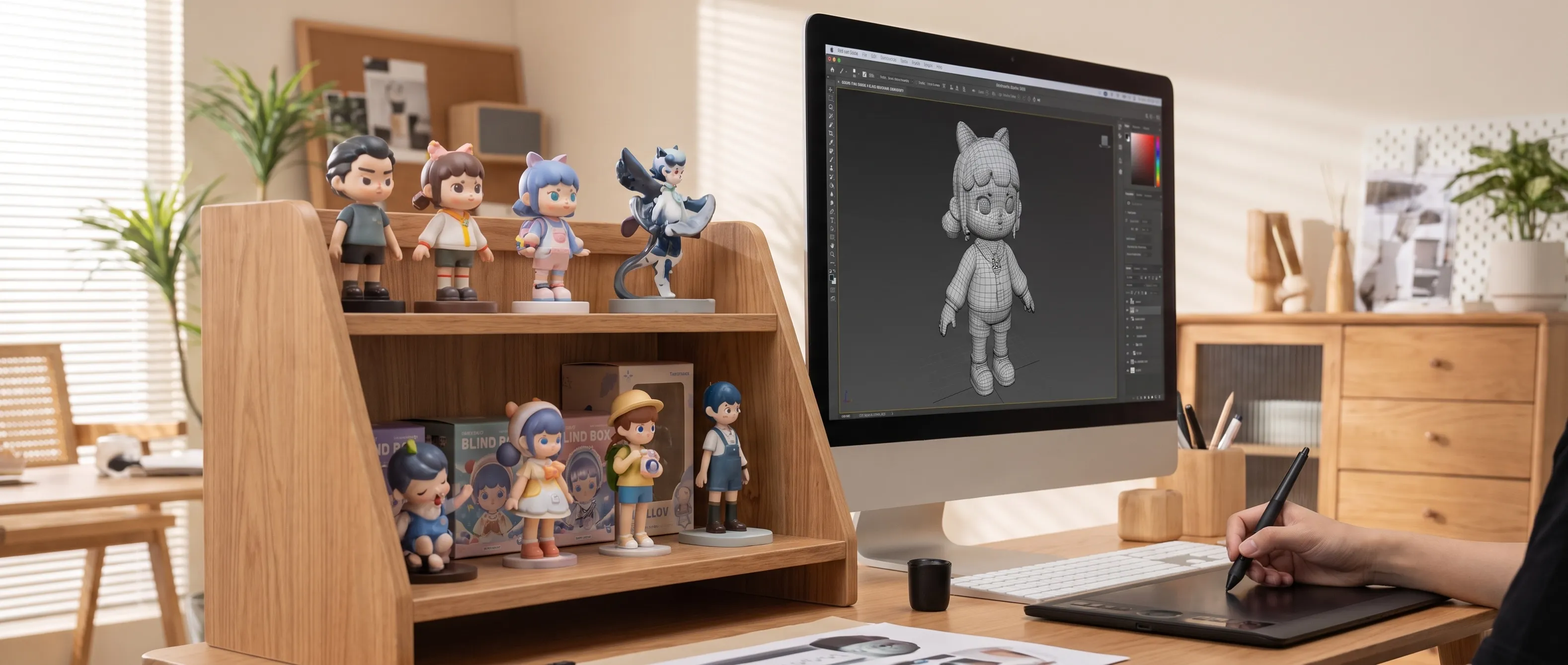
If you're developing character merchandise, one of the first decisions you'll face is material: silicone or PVC?
Neither is universally better. Each fits different products, different retail channels, and different customer expectations. Here's how to choose.
The short version
If you're making... | Go with... |
|---|---|
Keychains, phone charms, fridge magnets | PVC or silicone (both work) |
Blind box figures, collectible toys | PVC |
Night lights, baby products, kitchen items | Silicone |
Wristbands, coasters, straw toppers | Silicone |
Luggage tags, badges, enamel pins | PVC |
Five dimensions that matter
1. Feel and texture
Silicone is soft, squishy, and matte. It feels premium in the hand — which is why it dominates categories like night lights (tap-to-turn-on) and baby products. PVC is harder, denser, and can hold much finer surface detail. That detail is what makes it the default for collectible figures.
2. Color and finish
Both materials accept Pantone-matched coloring. Silicone gets its color during the compounding stage (pigment mixed into raw material before molding), which means colors are consistent batch-to-batch. PVC is painted after molding — allowing gradients, metallic finishes, and multi-color designs that silicone can't achieve.
3. Safety and certifications
Silicone is naturally BPA-free and food-grade, making it the safer choice for products that might go in someone's mouth (baby teethers, straw toppers). PVC must be explicitly phthalate-free and certified. Both can pass EN71, CPSIA, CE, and RoHS — but silicone gets there with less documentation overhead.
4. Mold cost and turnaround
Simple 2D PVC molds start around 200.Complex3Dsiliconemoldsrange200.Complex3Dsiliconemoldsrange500-1,500. Silicone molds are generally cheaper for simple shapes but more expensive for detailed 3D forms because of the curing process.
5. Durability and lifespan
Silicone resists tearing, yellowing, and temperature extremes. A silicone keychain will look the same after two years on a backpack. PVC can scratch, fade in direct sunlight, and turn brittle in extreme cold — but inside a blind box or on a shelf, these aren't real problems.
Case study: night lights
A European designer toy brand approached us wanting squishy character night lights. They initially assumed PVC — because their main product line was PVC figures. We recommended silicone instead.
Why? Three reasons: (a) the product would be touched and squeezed nightly, where silicone's softness matters; (b) the LED housing needed consistent light diffusion, which silicone handles better than painted PVC; (c) CE and EN71 certification for a children's bedside product was simpler with food-grade silicone.
The result: 8,000 units delivered, CE certified, sold in EU retail within 3 months of the first prototype.
Case study: blind box figures
An Asian toy brand was launching a 12-figure mystery box series. Silicone was never an option — they needed the fine facial detailing, gradient painting, and crisp mold lines that only PVC injection molding can deliver. The series used PVC for the figures and ABS for the display bases.
The rule of thumb
Ask yourself two questions:
- Will the end user touch this product frequently? → Lean silicone.
- Does the product need detailed painting and fine features? → Lean PVC.
If the answer to both is yes — like a phone charm that needs character detail but gets handled daily — either material works. In that case, let your target retail price point and MOQ decide.
What to tell your manufacturer
Instead of asking "should I use silicone or PVC," send them:
- Your character artwork or reference image
- The product type (keychain, figure, night light, etc.)
- Your target age range (adult collectible vs. children's product)
- Your target retail market (EU, US, Japan — certification standards differ)
- Your approximate order quantity
A factory that's produced both materials will give you a straightforward recommendation — and if they try to upsell you into a more expensive process without explaining why, they're not the right partner.