Jul 17, 2026OEM/ODM Guides
How to Turn Your 2D Character Into a 3D Collectible PVC Figure
How a flat character sketch becomes a 3D collectible — from artwork prep and mold making to painting and QC. Real timelines, real costs, no guesswork.
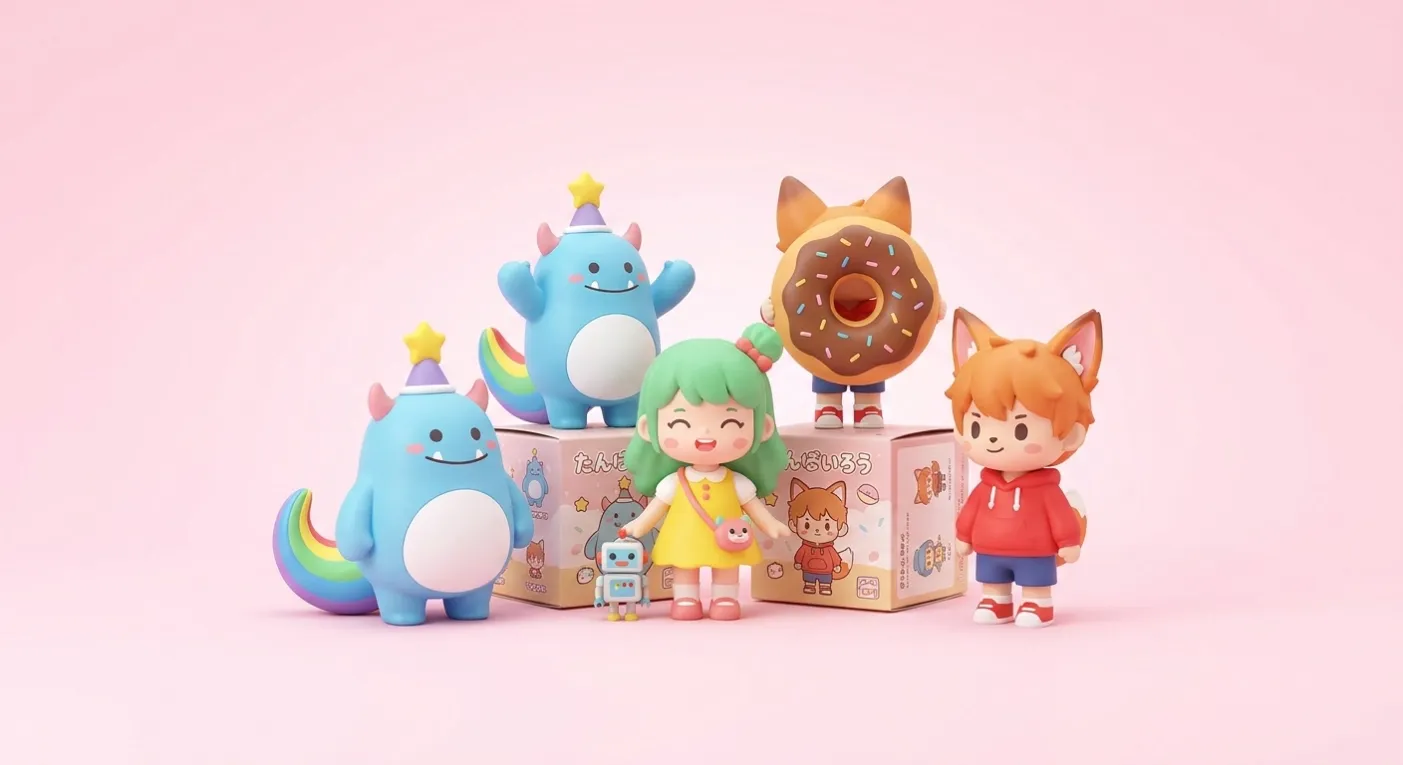
If you run an IP brand, a designer toy studio, or an animation company, you've probably wondered: how does a flat character sketch actually become a 3D figure people can buy?
It's not magic. It's a seven-stage process that happens inside a factory — and the more you understand it before reaching out to a manufacturer, the smoother your project will go.
Step 1: Your artwork, translated into a production file
You send a 2D character sketch — or better, a three-view drawing (front, side, back) or a 3D file (STL, OBJ, STP). If all you have is a sketch, the factory's 3D modeling team builds the production file from it. This step takes about 3-5 days.
What matters here: the character's pose. Dynamic poses with outstretched arms or thin connecting parts look great on paper but create mold challenges. A good factory will flag these before you spend money on tooling.
Step 2: 3D prototype printing
Once the 3D model is approved, a resin prototype is printed. You'll receive photos — or better, the physical sample shipped to you — for shape and proportion approval. This is the time to catch issues. Moving a figure's arm back 3mm now costs nothing. Moving it after the mold is cut costs a new mold.
Timeline: 2-4 days for printing and finishing.
Step 3: Mold making
This is where the real investment begins. Steel or copper molds are CNC-machined to capture every detail of your character. Each cavity is hand-polished — a step that directly affects the final paint quality.
PVC figure molds typically cost $800-2,500 depending on size (3cm to 15cm tall) and part count (single piece vs. articulated limbs). Most factories credit the mold fee back on orders above 5,000 pcs.
Timeline: 10-15 days for mold cutting and trial shots.
Step 4: Material selection
Three materials dominate collectible figure production:
- PVC (injection molding): Best for detailed figures under 15cm. Holds fine textures, accepts paint well. The standard for blind box toys and anime figures.
- Vinyl (rotocasting): Softer, lighter, hollow. Common in designer art toys and larger figures (15cm+). Slightly less detail than PVC but more affordable for smaller runs.
- ABS: Hard plastic used for structural parts, bases, and accessories. Often combined with PVC in the same figure.
All materials should be phthalate-free and certified to EN71, CPSIA, or ASTM F963 if you're selling in retail.
Step 5: Pre-production sample
Before mass production starts, the factory produces 2-3 painted samples for your final sign-off. This sample uses the actual production mold — so what you approve is what you get.
Check: color matching (Pantone references), paint alignment on edges, overall proportions, any visible mold lines, and base stability.
Step 6: Mass production
Production runs through dedicated lines: injection molding (or rotocasting) → deflashing → spray painting → pad printing → hand detailing → assembly → QC inspection.
A standard 8cm PVC figure takes about 20-30 days from mold approval to packed shipment. Rush orders can compress this to 15-18 days for an added fee.
Step 7: QC and packaging
Every unit passes a visual and functional inspection. Then it moves to packaging: blind foil bags, window boxes, blister cards, or display trays — whatever your retail channel requires.
After final QC, the order is packed into master cartons and shipped. Air freight takes 7-10 days to most markets; sea freight 25-35 days.
What this means for your project
The entire cycle — from your first email to boxes arriving at your warehouse — is typically 5-7 weeks for a standard PVC figure run. Knowing this timeline helps you plan your product launch around trade shows, seasonal retail windows, or Kickstarter fulfillment dates.
If you're ready to start, share your character artwork and target quantity. A factory that knows what they're doing will give you a clear timeline and won't surprise you with hidden costs halfway through.